
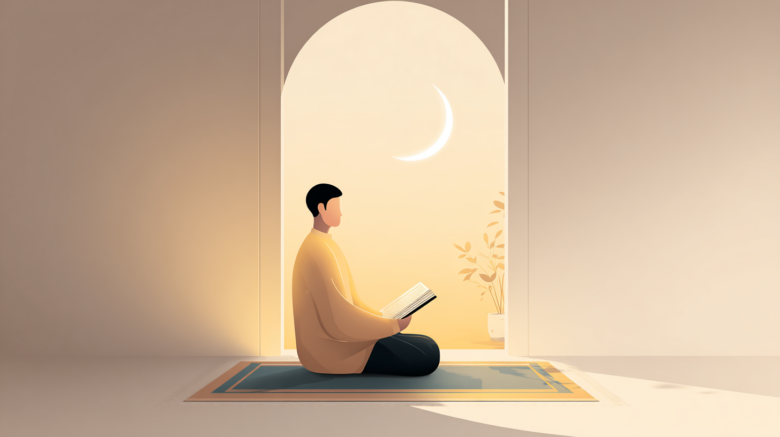
Every January, we swear this year will be different.
New habits. New mindset. New life.
And by February?
We’re back to square one.
But here’s the truth no one talks about:
Ramadan has always been the real self-improvement season.
Not because of motivation.
Not because of vibes.
But because it’s built on systems—fasting, prayer, discipline, routine, and intention.
So this year, instead of treating Ramadan like a temporary spiritual glow-up, what if we used Atomic Habits principles to make our worship stick—long after Eid?
Why Ramadan Beats New Year’s Resolutions
New Year’s resolutions fail because they rely on motivation.
Ramadan works because it creates structure.
You already:
- wake up earlier
- pray more
- eat with discipline
- control impulses
- give in charity
- reflect more
Ramadan doesn’t ask, “Do you feel like it today?”
It builds a routine that trains your soul.
That’s literally the foundation of Atomic Habits:
small actions, done consistently, shape your identity.
Step 1: Start With Identity (Not Goals)
James Clear says:
“The most powerful way to change your habits is to change your identity.”
So don’t start with:
“I want to finish the Qur’an.”
“I want to pray Tahajjud.”
“I want to stop wasting time.”
Start with:
- I am someone who guards my salah.
- I am someone who reads Qur’an daily.
- I am someone who controls their tongue.
- I am someone who gives regularly.
Ramadan becomes a training ground for becoming that person.
Step 2: Make Worship Obvious + Easy
Good habits fail when they’re invisible or inconvenient.
Ramadan glow-up hack:
- Put your Qur’an on your prayer mat.
- Keep a dhikr card by your bed.
- Set prayer + dua reminders.
- Put a charity jar on your desk.
- Prep suhoor the night before.
You’re not weak.
Your environment just isn’t designed for iman.
Step 3: Stack Worship Into Your Routine
Atomic Habits rule:
After X, I will do Y.
This is elite-level habit building.
Examples:
- After Fajr → read 1 page Qur’an
- After Dhuhr → 5 minutes dhikr
- After Maghrib → make dua
- After Taraweeh → reflect or journal
- After Suhoor → istighfar
You stop relying on willpower.
Your routine carries you.
Step 4: Make Worship Attractive
If your spiritual life feels dry, your habits won’t last.
Make worship something you look forward to:
- Cozy prayer corner
- Soft lighting + nice scent
- Favorite tea after Qur’an
- Family or friend Qur’an challenge
- Reward streaks (not perfection)
You’re allowed to enjoy your deen.
Step 5: Make Bad Habits Harder
You can’t grow spiritually while feeding distractions.
Ramadan detox moves:
- Log out of social media
- Phone outside the bedroom
- Limit gossip spaces
- Replace scrolling with Qur’an
- Block apps during fasting hours
Don’t fight temptation.
Remove access.
Step 6: Track + Never Miss Twice
Progress beats perfection.
Use a simple tracker:
- Salah
- Qur’an
- Dhikr
- Dua
- Sadaqah
Miss a day?
Cool.
Just don’t miss twice.
Consistency is built through resets, not streaks.
Step 7: Use the Goldilocks Rule
Too easy → bored
Too hard → burnout
Set goals that stretch you just enough:
- Start with 1 page Qur’an
- Add more later
- Pray 2 extra rak‘ahs
- Increase gradually
Ramadan is a marathon, not a sprint.
Step 8: Lock It In After Ramadan
This is where most people lose everything.
Don’t try to keep all habits.
Keep 1–2 identity habits.
Same trigger.
Same routine.
Ramadan shouldn’t end your growth.
It should start your lifestyle.
The One-System Framework
Here’s the whole system in one loop:
Identity → Environment → Routine → Reward → Consistency → Sustainability
That’s Atomic Habits…
but halal.
Final Reflection
Every year, we chase motivation.
But Ramadan teaches us something deeper:
Discipline > Motivation
Systems > Goals
Consistency > Intensity
This year, don’t just survive Ramadan.
Systemize it.
Let Ramadan be the month you don’t just glow up spiritually…
but actually become someone new.
TL;DR
- Ramadan is the real self-improvement season
- Start with identity
- Design your environment
- Stack habits
- Make worship attractive
- Remove distractions
- Track progress
- Avoid burnout
- Lock in 1–2 habits after Eid